 Amanda Pierce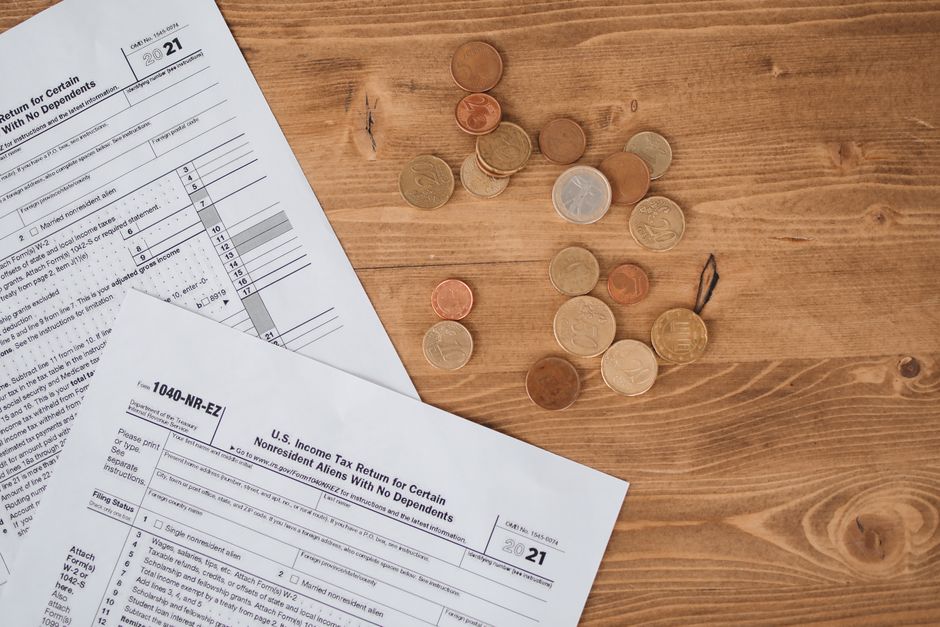
A client texted me last week, genuinely relieved: “Good news, I read we get 23% QBI now, so I’m adjusting my Q3 estimates down.” I had to call her back immediately. That’s the kind of mistake that turns into a penalty notice in January, and right now it’s spreading faster than I can correct it one phone call at a time.
Here’s what actually happened. The One Big Beautiful Bill Act, signed into law as Pub. L. 119-21, did make the Section 199A qualified business income deduction permanent. That part is real and it matters. But the rate stayed at 20%. The House-passed version did include a bump to 23%, and a lot of business owners read early headlines about that version and stopped there. The final enacted law did not include the increase. The 23% figure is still a proposal, not a reality.
The bill that would actually raise the deduction to 23% is H.R. 8415, the Small Business Tax Cut Act of 2026, introduced by Rep. David Kustoff in April 2026. As of August 2026, it has not passed. It is sitting in Congress, supported but unscheduled. The NFIB backed it in a letter to the House on April 23, 2026, calling it a benefit to “tens of millions of small businesses,” and supporters are hoping to attach it to a future reconciliation bill before Congress adjourns. No timeline has been confirmed.
- The QBI deduction rate is still 20% as of August 2026, not 23%.
- H.R. 8415 would raise QBI to 23%, but it has NOT yet become law.
- The One Big Beautiful Bill made the 20% deduction permanent but did not increase it.
- Q3 estimated taxes are due September 15, 2026. Plan based on 20%, not 23%.
- The Tax Foundation estimates the 23% increase would cost roughly $104 billion in federal revenue.
Why This Confusion Is Costing Owners Real Money
The misunderstanding isn’t random. It’s the predictable result of legislation moving in two tracks, and media coverage collapsing both into the same story. When the House passed its version of the big tax bill earlier this year with the 23% rate, plenty of outlets ran that number. Then the final law came out different, and the correction didn’t travel as fast as the original headline.
What makes this especially risky right now is timing. Q3 estimated tax payments are due September 15, 2026. If you’re a sole proprietor, S-corp owner, or partner in a business, your quarterly estimates are built on projected tax liability. Underestimate because you assumed a bigger deduction, and you’ll face underpayment penalties when you file. The IRS doesn’t care what you read on the internet.
More than 90% of U.S. businesses are structured as pass-throughs, meaning sole proprietors, S-corps, and partnerships. That number puts the QBI rate among the most consequential tax figures in the entire code for Main Street. A 3-percentage-point difference on the deduction rate isn’t trivial. On $200,000 of qualified business income, the difference between a 20% and a 23% deduction is $6,000 in deductible income, which translates to real tax dollars depending on your bracket.
What the Law Actually Says Right Now
Helpful resource: Avery Business Card Binder for Networking is a top-rated option for this. (As an Amazon Associate this site earns from qualifying purchases.)
The Section 199A deduction, as enacted in Pub. L. 119-21, lets eligible pass-through business owners deduct up to 20% of their qualified business income from their taxable income. The deduction is now permanent, which is genuinely good news after years of it being a temporary provision set to expire. But permanent at 20% is different from 23%, and anyone building a projection for the back half of 2026 needs to use the right number.
A few other mechanics matter here. The deduction has income thresholds and phase-outs for specified service trades or businesses (things like law, consulting, and financial services). W-2 wage limitations kick in at higher income levels. These haven’t changed. If you were already working around them, that work still applies.
| Scenario | Deduction Rate | Deductible Amount on $200K QBI | Estimated Tax Savings (24% bracket) |
|---|---|---|---|
| Current law (enacted) | 20% | $40,000 | $9,600 |
| H.R. 8415 if passed | 23% | $46,000 | $11,040 |
| Difference | +3% | +$6,000 | +$1,440 |
That $1,440 difference matters to a small business owner. It also explains why the NFIB is pushing hard for the bill. But it is not money you can count yet.
H.R. 8415: What You’re Actually Waiting For
Rep. Kustoff introduced H.R. 8415 on April 21, 2026. The Tax Foundation estimates the rate increase would reduce federal revenue by roughly $104 billion, which is why it needs an offset before Congress can move it through reconciliation. That’s not a small number, and “pay-for” negotiations are where tax bills go to take a long time.
As Frazier & Deeter reported in June 2026, tax committee members are still actively pursuing the increase, and the NFIB’s public backing gives it political wind. But “pursuing” and “enacted” are very different words. The supporters’ best current strategy is attaching the provision to a future reconciliation package before Congress adjourns, and as of August 2026, there is no confirmed vehicle or vote date for that.
I’ve seen owners make financial decisions based on legislation that was “expected to pass any day.” Sometimes it does. Sometimes it doesn’t for two more years. Plan your 2026 taxes on what is law, not what might be.
How to Handle Your Q3 Estimates and Year-End Planning
If you’ve already adjusted your estimated payments assuming 23%, fix it now. September 15 is close enough that a corrected Q3 payment is the cleanest solution. Your tax advisor can help you recalculate using the 20% rate and make sure you’re not underpaid for the year.
For year-end planning, which a lot of owners start thinking about in September and October, the smart play is to model both scenarios. Build your primary plan on the 20% rate as law today. Then build a secondary version that shows what changes if H.R. 8415 passes before December 31, 2026. That way you’re not scrambling to restructure anything if it does pass, and you’re also not exposed if it doesn’t.
What most people don’t realize is that the deduction becoming permanent already changes some year-end math. Before this, there was risk that the QBI deduction would sunset entirely. That’s off the table now. For income-shifting strategies, retirement contributions, and timing of business income, having a permanent 20% deduction is a stable baseline you can actually plan around.
One more thing worth saying plainly: the QBI deduction has a lot of moving parts, especially once you’re above the income thresholds or in a service business. The interaction between your W-2 wages, your allocable share of qualified property, and your entity structure can produce very different results. A conversation with a CPA or tax advisor who knows your specific situation isn’t optional here. This article gives you the framework. Your numbers are yours.
The misinformation will keep circulating because correcting things is less shareable than announcing them. Your job is to know the actual law, use the actual rate, and pay the right estimate on September 15. The 23% deduction may come. But it’s not here yet.
Sources
- QBI Deduction 2026: What Actually Changed, and What Didn’t , Manay CPA (late July 2026)
- NFIB Supports Legislation to Increase the Small Business Deduction to 23% (April 23, 2026)
- H.R. 8415 , Small Business Tax Cut Act of 2026 (Congress.gov) (April 21, 2026)
- QBI Deduction Increase Gains Support , Frazier & Deeter (June 24, 2026)
- Update on the Small Business Tax Deduction: What to Know in 2026 , ARF Financial (May 28, 2026)
- Small Business Tax Cut Act Would Raise Key Deductions for SMBs , ASBN (April 30, 2026)
Photo: Polina Tankilevitch via Pexels
This article is for general informational purposes only and does not constitute financial, tax, or legal advice. Business finance and tax rules vary by entity type, state, and individual circumstances. Consult a qualified CPA, enrolled agent, or business attorney for advice specific to your situation.
Recommended Resources
Disclosure: As an Amazon Associate, we earn a small commission from qualifying purchases at no extra cost to you. We only recommend products that genuinely support the topics covered in this article.
- Mastering QuickBooks 2025 (~$32), The most comprehensive QuickBooks 2025 guide, covers bookkeeping, payroll, invoicing, tax prep, and cash flow.
- Accounting for Small Business Owners (~$14), Beginner-friendly accounting guide covering basic bookkeeping, financial statements, and managing business taxes.