 Amanda Pierce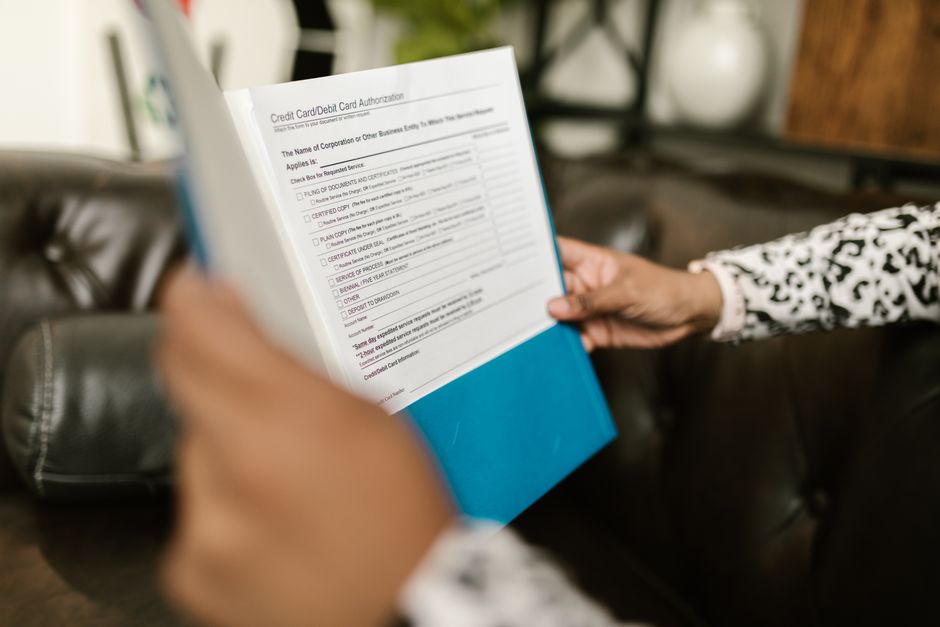
Most coverage of revolving credit facilities makes them sound like a sophisticated instrument reserved for mid-market companies with a CFO and a syndicated bank group. That framing is wrong, and it leaves a lot of small business owners either ignoring a tool that would actually help them, or misusing one because nobody explained the mechanics honestly.
Here’s what a revolving credit facility actually is: a pre-approved credit limit you can draw from, repay, and draw from again, repeatedly, over the life of the agreement. Think of it like a business credit card with a much larger limit, lower interest rates, and actual underwriting behind it. You’re not taking a lump-sum loan. You’re accessing a pool of capital as you need it, paying interest only on what you’ve drawn, and restoring your available balance as you pay it back.
That last part is where the “revolving” comes in, and it’s the feature that makes this instrument genuinely different from a term loan.
- You pay interest only on the amount drawn, not the full credit limit.
- Lines typically range from $25,000 to $5 million for small businesses, depending on lender and financials.
- Draw-repay-redraw cycles can repeat indefinitely within the facility term (usually 1-3 years).
- Revolving facilities work best for working capital gaps, not long-term capital expenditures.
- Annual fees, unused line fees, and covenant requirements can quietly erode the value if you're not watching.
How the Mechanics Actually Work
When a lender approves you for a $300,000 revolving facility, you don’t receive $300,000. You receive access to $300,000. Draw $80,000 in February to cover a slow receivables month. Pay back $50,000 in March when your clients settle invoices. Now you have $270,000 available again. Draw $120,000 in April for a big inventory purchase. The cycle continues.
Interest accrues daily on your outstanding balance. So if you draw $80,000 at an 8.5% annual rate, you’re paying roughly $18.63 per day in interest until you pay it down. That math matters because it’s easy to treat a revolver like a parking spot for debt rather than a short-term float tool.
Lenders will typically charge a commitment fee (also called an unused line fee) on the portion you haven’t drawn. This runs between 0.25% and 0.75% annually in most bank agreements I’ve reviewed. On a $300,000 facility where you only ever use $80,000, you’re paying a fee on the idle $220,000. That quiet cost is the one most borrowers miss when they compare revolvers to term loans.
The facility itself comes with an expiration date, usually 12 to 36 months. Before it expires, you renegotiate or let it lapse. Some lenders have annual review clauses where they can reduce your limit or call the line if your financials deteriorate. I’ve seen that happen to clients mid-year during a rough quarter. It’s not common, but it’s in the agreement.
Secured vs. Unsecured: What You’re Actually Being Asked to Sign
Helpful resource: Pendaflex Expandable File Organizer for Business Records is a top-rated option for this. (As an Amazon Associate this site earns from qualifying purchases.)
Smaller revolvers (generally under $100,000) from fintech lenders are often unsecured, meaning no specific collateral. You’ll pay for that flexibility with rates that can run anywhere from 10% to 25% APR depending on your creditworthiness. The application process is faster, sometimes 24 to 48 hours, and the documentation requirements are lighter.
Bank-issued revolvers above $100,000 almost always require collateral. The two most common structures are asset-based lending (ABL), where you’re borrowing against receivables and inventory, and blanket lien facilities, where the lender takes a security interest in substantially all business assets. ABL revolvers calculate your borrowing base monthly, which means your available credit actually fluctuates with your receivables balance. A $500,000 ABL facility might only let you draw $310,000 this month because your eligible receivables don’t support more.
I made the mistake early in my consulting career of treating a client’s ABL availability as fixed. It’s not. The borrowing base certificate is recalculated regularly, and if your receivables age out past 90 days or your customer concentration gets too high, the bank will reduce what you can actually touch. The first time you see a borrowing base certificate, it looks like an accounting exam. Budget an hour with your lender to walk through it.
Comparing Your Options
Not all revolving credit products are built the same. Here’s a realistic look at what you’ll encounter across common sources:
| Lender Type | Typical Line Size | Rate Range (APR) | Collateral Required | Approval Time | Annual/Unused Fees |
|---|---|---|---|---|---|
| Large national bank (e.g., Wells Fargo, Chase) | $100K - $5M+ | 7% - 12% | Yes (blanket lien or ABL) | 2-6 weeks | 0.25% - 0.50% unused fee |
| Community bank / credit union | $25K - $750K | 7.5% - 13% | Often yes, sometimes no | 1-3 weeks | Varies; sometimes none |
| SBA CAPLine (revolving variant) | Up to $5M | Prime + 2.25% - 4.75% | Yes | 4-12 weeks | SBA guarantee fee applies |
| Fintech lender (e.g., Bluevine, Fundbox) | $6K - $250K | 15% - 40%+ | No (unsecured) | 24-72 hours | Draw fees or weekly repayment |
| Invoice factoring line (hybrid) | Tied to invoice volume | 1% - 5% per invoice | Receivables as collateral | 1-2 weeks | Varies |
Current rates as of July 2026 are running higher than the pre-2022 norms, so don’t anchor on the rates you read in a 2019 article. Ask your lender for their current floor, and ask explicitly whether it’s fixed or floating. Most bank revolvers are indexed to prime or SOFR (which replaced LIBOR), meaning your rate moves when benchmark rates move.
When a Revolver Makes Sense (and When It Doesn’t)
Revolving facilities are genuinely excellent for one category of problem: predictable, short-cycle cash gaps. Seasonal businesses. Service firms waiting on slow-paying clients. Distributors who need to buy inventory before the revenue arrives. A 45-day float covered by a revolver at 9% costs you far less than the cost of a lost client or a missed purchase discount.
They are a bad fit for funding growth that won’t generate cash for 12 or 24 months, or for covering operating losses you haven’t addressed structurally. I’ve watched business owners treat a revolver like a second P&L, drawing it up and never paying it down because the underlying business can’t generate enough cash to support the balance. At that point you’ve effectively converted a revolving line into a permanent term loan at revolving-line pricing. That’s an expensive way to fund a structural problem.
Worked examples worth understanding:
Restaurant group with seasonal revenue - Drew $95,000 in January to cover payroll and vendor invoices during their slow winter months. Repaid fully by April when spring catering revenue hit. Total interest cost: roughly $1,900 over three months. A term loan for the same amount would have required 24 months of fixed payments they didn’t need.
Staffing agency growing a new government contract - Used a $400,000 ABL revolver to fund a 90-day gap between payroll obligations and government payment terms. Borrowing base was tied to eligible receivables. Drew an average of $220,000 at a time. Annual interest cost came to around $19,800. Without the facility, they would have turned down a contract worth $1.2 million in annual revenue.
E-commerce retailer over-relying on a revolver - Carried an average balance of $180,000 on a $200,000 facility for 14 consecutive months. Interest at 14% added roughly $25,200 in annual cost that didn’t appear in their cash flow analysis. The revolver was masking a margin problem. When the lender did their annual review and tightened covenants, it forced a hard conversation that probably should have happened a year earlier.
What Lenders Are Actually Looking At
Banks underwriting a revolving facility care about three things more than anything else: your debt service coverage ratio, the quality of your receivables, and whether your management team has been through a down cycle before. They won’t always say that last one out loud, but ask any commercial lender after hours and they’ll tell you.
Debt service coverage is typically calculated as EBITDA divided by total debt service (principal and interest). Most lenders want 1.25x or better. If your business generates $200,000 in annual EBITDA and you have $120,000 in existing debt service, you’re at 1.67x. That’s approvable. At 1.1x, you’ll either get declined or hit with a covenant requiring you to maintain a minimum balance.
The IRS small business tax center is worth visiting before you apply, because lenders will ask for at least two years of business tax returns and will reconcile your reported income carefully. Discrepancies between your bank statements and your Schedule C (or Form 1120-S for S-corps) will generate questions.
The Consumer Financial Protection Bureau has published small business credit access resources that clarify your rights during the underwriting process, including disclosure requirements that took effect in recent years. Worth knowing before you sit across the table from a lender.
Sources
- Consumer Financial Protection Bureau, Small Business Resources: Covers small business lending disclosures, borrower rights, and access to credit data
- IRS Small Business Tax Center: Required financial documentation guidance relevant to lender underwriting
- Federal Reserve Bank, Small Business Credit Survey: Annual survey of small business financing conditions and credit access trends
- SBA CAPLine Program Overview: Official terms for the SBA’s revolving credit variant for small businesses
- Aswath Damodaran, Corporate Finance: Theory and Practice: Foundational framework for understanding credit facility structures and cost of capital decisions (available on Amazon, where this site may earn a commission)
Photo: RDNE Stock project via Pexels
This article is for general informational purposes only and does not constitute financial, tax, or legal advice. Business finance and tax rules vary by entity type, state, and individual circumstances. Consult a qualified CPA, enrolled agent, or business attorney for advice specific to your situation.
Recommended Resources
Disclosure: As an Amazon Associate, we earn a small commission from qualifying purchases at no extra cost to you. We only recommend products that genuinely support the topics covered in this article.
- Mastering QuickBooks 2025 (~$32), The most comprehensive QuickBooks 2025 guide, covers bookkeeping, payroll, invoicing, tax prep, and cash flow.
- Accounting for Small Business Owners (~$14), Beginner-friendly accounting guide covering basic bookkeeping, financial statements, and managing business taxes.