 Sarah Johnson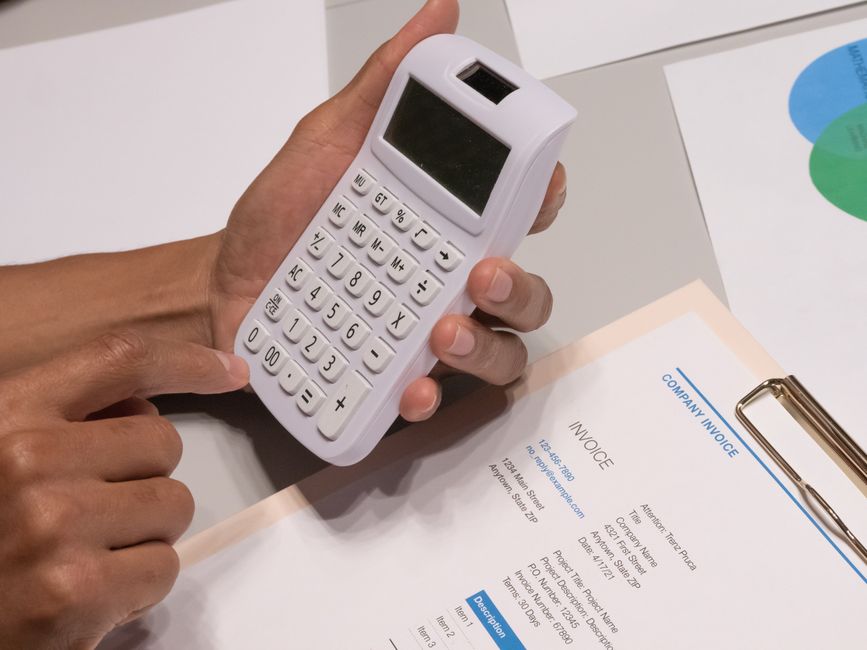
You send the invoice. Then you wait. A week goes by. Then two. You follow up, feeling awkward about it, and the client responds with “Oh, I didn’t get that” or “We’ll process it next cycle.” Meanwhile, your rent is due and your cash flow looks like a heart monitor after a sprint. If you’ve been in business more than six months, you know this feeling. And the frustrating part is that most of the pain is preventable.
Invoicing isn’t glamorous. Nobody starts a business dreaming about billing software and payment terms. But your invoice is the document that actually turns your work into money. Getting it wrong, or just being sloppy about it, costs real dollars and real time.
Different payment terms create different cash-flow outcomes and client expectations-here's how the common options compare for small businesses.
| Payment Term | What It Means | Best For | Cash-Flow Impact | Client Perception |
|---|---|---|---|---|
| Due on Receipt | Payment expected immediately upon invoice delivery | One-time projects, new clients, amounts under $500 | Fastest cash; may require follow-up if ignored | Can feel aggressive; set expectation in contract first |
| Net 15 | Payment due within 15 calendar days | Freelancers, ongoing retainers, small-to-mid invoices | Good balance of speed and client flexibility | Reasonable; increasingly common for small vendors |
| Net 30 | Payment due within 30 calendar days | Established client relationships, invoices over $2,000 | Standard but can strain thin margins | Expected by most corporate AP departments |
| Net 60 | Payment due within 60 calendar days | Large enterprise contracts, wholesale/inventory businesses | Significant delay; requires cash reserves or credit line | Often requested by big companies; negotiate if possible |
| 2/10 Net 30 | 2% discount if paid in 10 days; otherwise full amount in 30 | Encouraging early payment on larger invoices ($1,000+) | Trades small margin for faster cash | Seen as professional; motivates prompt payers |
| 50% Upfront / 50% on Completion | Split payment at project start and delivery | Custom projects, new clients, amounts over $1,500 | De-risks large jobs; funds materials/labor upfront | Standard for contractors, designers, consultants |
Illustrative general information, confirm current figures for your situation.
What Your Invoice Actually Needs to Include
A lot of small business owners send out invoices that are technically incomplete. Missing line items. No payment terms specified. Templates they grabbed from somewhere without actually reading them. Then they’re confused when clients drag their feet or question charges.
Here’s what a professional invoice actually requires:
- Your business name, address, and contact information
- The client’s full name or company name and billing address
- A unique invoice number (this matters more than you think for your records)
- The invoice date and the due date, spelled out clearly
- An itemized list of services or products, with quantities and unit prices
- The total amount due, including any applicable taxes
- Accepted payment methods
- Any late fee policy, stated clearly
That last one trips people up. If you plan to charge a late fee, you have to tell the client upfront, ideally in your contract and again on the invoice itself. You can’t just add it later and expect it to stick.
I’ve watched clients lose legitimate disputes because their invoice didn’t state net-30 terms anywhere. The client assumed 60 days. Write it plainly: “Payment due by March 15, 2025.” Don’t just write “Net 30” and hope everyone’s on the same page.
Set Payment Terms That Actually Work for Your Cash Flow
Helpful resource: The E-Myth Revisited by Michael Gerber is a top-rated option for this. (As an Amazon Associate this site earns from qualifying purchases.)
Net 30 became the default in B2B almost by accident. It’s not law. It’s a convention, and it’s one that usually works against small businesses with their own bills to pay.
Think about what net 30 actually means. You complete the work, send the invoice, and wait up to 30 days to get paid. If your client is slow with mail or has a backlog in accounting, you’re looking at 45 days or more. Your money is sitting in someone else’s bank account.
Try this instead:
For project-based service work: Get a deposit before you start. Usually 25 to 50 percent. The rest is due on delivery or within 7 to 14 days after. This protects you and gives the client a reason to stay engaged in the project.
For monthly retainer clients: Bill at the start of the month, not the end. You’re providing access to your time and skills. No reason to float that cost for 30 days after you’ve already delivered it.
For product businesses or larger orders: Net 15 is often totally reasonable, especially for smaller customers. Save net 30 for clients with a solid payment history or situations where their size gives them leverage.
Getting paid faster is almost always more valuable than accommodating a customer’s preference for delayed payment.
You could also try early payment discounts. “2/10 net 30” means 2 percent off if they pay in 10 days. Some clients bite. Others ignore it. Worth testing if you’ve got someone who has cash but just moves slow on invoicing.
Use Software, Not a Word Doc
Cash Flow Masterclass for Business Owners (Before It's Too Late) · BizMoney Explained on YouTube
If you’re building invoices in Microsoft Word or stitching them together in a spreadsheet, stop. Not because it’s morally wrong, but because it’s slowing you down, creating mistakes, and making your books a nightmare to reconcile.
Invoicing software does things Word can’t. Tracks whether an invoice got opened. Sends automatic reminders. Logs when payments land. Calculates totals and tax automatically. It connects to your accounting records so you’re not typing the same data twice.
QuickBooks Online, FreshBooks, and Wave (free) are the three I see most with small business clients. Wave works well for freelancers and tiny operations. QuickBooks is the standard if you’re handing your books to a CPA eventually. FreshBooks is in the middle with an interface that non-accountants actually enjoy using.
For a deeper picture of how invoicing fits into your broader accounting system, Accounting QuickStart Guide by ClydeBank Business is practical and doesn’t assume you’ve got a finance degree. (Disclosure: this site may earn a commission from qualifying Amazon purchases.)
The biggest benefit? You get a paper trail automatically. When a client swears “I never got that invoice,” you pull up the timestamp showing when it was sent, when they opened it, and what it contained. Game over.
A Step-by-Step Process for Following Up on Unpaid Invoices
Most small business owners lose money here, not because clients refuse to pay, but because there’s no follow-up system and the invoice just vanishes.
Here’s what works:
Step 1: Send the invoice immediately. Don’t wait until Friday or month-end. Invoice the same day work is done or products ship.
Step 2: Set an automatic reminder in your software. Most tools let you schedule a “friendly reminder” email 3 to 5 days before the due date. This isn’t nagging. It’s process.
Step 3: Call the day after due date. Not email. Phone. A two-minute call saying “Hi, I wanted to check that everything looks good with invoice #1042” gets faster results than another email ever will.
Step 4: Send a formal overdue notice at 7 days past due. Polite but direct. Reference the invoice number, amount, original due date, and any late fee that’s now applied.
Step 5: At 30 days past due, escalate. That means a more formal written notice citing your contract, possible suspension of future services, and a conversation about payment plans. For significant amounts, consult a collections attorney or consider small claims court.
Here’s something I want to be straight about. Most late payments don’t need lawyers. They need consistency. Clients who know you’ll actually follow up reliably deprioritize vendors who disappear.
How Your Invoice Language Affects How Fast You Get Paid
This catches people off guard. A 2013 FreshBooks study found that invoices with “please” and “thank you” language got paid several days faster than those without. Small thing. Real impact.
Beyond courtesy, be direct about consequences. “A late fee of 1.5 percent per month will apply to balances unpaid after 30 days” is clear. “Invoices are subject to additional charges if not paid promptly” is vague and won’t hold up.
Also think about how you describe what you did. Vague line items like “consulting services” invite questions and delays. Specific descriptions like “Brand strategy session, March 4, 2025, 2 hours” leave nothing to argue about. The clearer your invoice is about what the client got, the harder it is to delay payment with “I need to verify this first.”
Your payment instructions need the same clarity. Don’t just say “check or ACH.” List your preferred method, include your bank routing and account number or a payment link, and say whether you take credit cards. Friction in the payment process is friction between you and your money.
Invoicing and Taxes: What You Need to Know
Your invoices are financial records. They matter at tax time. How you invoice affects how you track revenue, what you owe, and when you owe it, especially if you’re using accrual accounting versus cash accounting.
On cash basis (what most small businesses use) income counts when you actually get paid. So a December invoice that lands in January is January income.
On accrual basis, income counts when you issue the invoice, regardless of payment timing. This matters for larger operations or if lenders want GAAP-compliant financials.
Sales tax is another piece. If you sell products or certain services, you may have to collect and remit sales tax, and your invoice needs to reflect that correctly. This is state-specific. Get it wrong and you’re looking at back taxes and penalties. Talk to a CPA about making sure your invoicing matches your actual tax obligations. This isn’t a guessing game.
Profit First by Mike Michalowicz is less about invoicing specifically and more about building a system where the revenue you collect actually becomes profit. It’s one of the most useful books I’ve recommended to clients. (Disclosure: this site may earn a commission from qualifying Amazon purchases.)
Your invoicing process is a direct reflection of how seriously you run your business. Clients notice sloppy invoices. They also notice professionals who are clear, timely, and consistent. You’ve already done the work. Build a system that makes sure you get paid for it.
Sources & References
- SBA, Managing Business Finances, supports cash flow management and invoicing best practices
- FTC, Business Guidance, supports fair billing and business communication practices
Photo: Kindel Media via Pexels
This article is for general informational purposes only and does not constitute financial, tax, or legal advice. Business finance and tax rules vary by entity type, state, and individual circumstances. Consult a qualified CPA, enrolled agent, or business attorney for advice specific to your situation.
Recommended Resources
Disclosure: As an Amazon Associate, we earn a small commission from qualifying purchases at no extra cost to you. We only recommend products that genuinely support the topics covered in this article.
- Mastering QuickBooks 2025 (~$32), The most comprehensive QuickBooks 2025 guide, covers bookkeeping, payroll, invoicing, tax prep, and cash flow.
- Accounting for Small Business Owners (~$14), Beginner-friendly accounting guide covering basic bookkeeping, financial statements, and managing business taxes.