 Rachel Green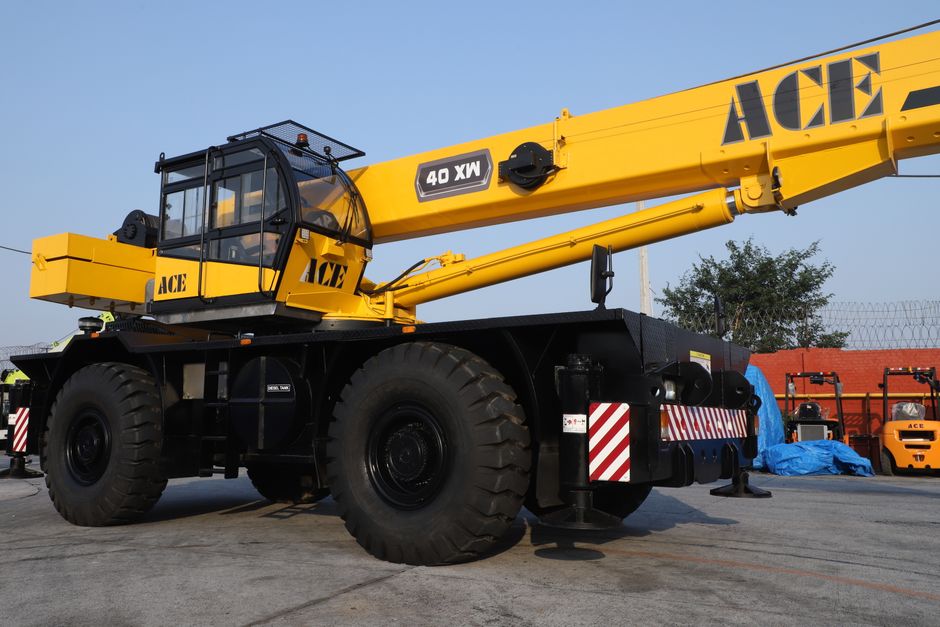
Most business owners treat the lease-vs-buy decision like a coin flip, or worse, they just do whatever their equipment vendor suggests. That’s how you end up with a five-year operating lease on a $12,000 piece of machinery that you could’ve owned outright by month 19.
Here’s the number that should reset your assumptions: according to the Equipment Leasing and Finance Association (ELFA), roughly 79% of U.S. companies use some form of equipment financing, including leasing. That’s not surprising by itself. What’s surprising is how many of those businesses never ran the actual math before signing. They leased because “it keeps cash flowing,” without ever checking whether the total lease cost was 30% or 60% higher than just buying the thing.
Let me fix that.
- Leasing preserves cash but costs more total: typically 20–40% above purchase price over the full term.
- Section 179 lets you deduct up to $1,160,000 in equipment purchases in the year you buy (2026 limit).
- Operating leases keep debt off your balance sheet; finance leases don't, they're essentially loans.
- If equipment obsoletes in under 3 years (tech, medical imaging), leasing usually wins on pure economics.
- Always compare total cost of ownership, not just monthly payment. Monthly payment math is how vendors win.
The Two Types of Leases (and Why Most People Confuse Them)
There’s an operating lease and a finance lease (what used to be called a capital lease before ASC 842 changed the accounting rules). Most small business owners don’t know the difference. I didn’t either the first time a client handed me a stack of lease agreements to review, and I had to go back to basics fast.
An operating lease means you’re essentially renting. You use the equipment, make payments, and at the end of the term, you return it or renew. The asset doesn’t show up as something you own on your balance sheet. For a lot of small businesses, this is attractive because it keeps debt ratios cleaner if you’re trying to qualify for other financing.
A finance lease is the opposite in spirit. You’re still making payments to someone else, but economically you’re buying the thing. It shows up on your balance sheet as both an asset and a liability. At the end of the term, you either own it outright or buy it for a nominal amount (sometimes $1). The IRS treats these more like purchases, which has real tax consequences.
The confusion costs people money. A business owner signs what looks like an “equipment lease” thinking it’s clean and off-balance-sheet, then their CPA tells them it’s actually a finance lease under ASC 842 and now they’ve got a liability they weren’t expecting. If you’re uncertain which type you’re signing, ask your CPA before, not after.
Running the Actual Numbers
Helpful resource: Adams Business Expense Record Book is a top-rated option for this. (As an Amazon Associate this site earns from qualifying purchases.)
Here’s where most articles fail you. They’ll say “leasing has lower monthly payments” and “buying builds equity” and then call it a day. That’s not analysis, that’s a brochure.
Let’s say you’re looking at a commercial-grade laser engraver priced at $28,000.
Buy outright: Pay $28,000 upfront. If you use Section 179, you may deduct the full purchase price in year one, reducing your taxable income by $28,000. At a 25% effective tax rate, that’s roughly $7,000 back, making your net cost closer to $21,000. You own it. If it holds any residual value in five years, that’s yours too.
Finance it: Put $3,000 down, finance $25,000 over 60 months at 7.5% APR. Monthly payment: roughly $501. Total paid over five years: $33,060 including the down payment. You own it at the end, but you paid $5,060 more than the sticker price.
Operating lease: $28,000 machine, 60-month term, lease factor of 0.019 (typical for this equipment tier). Monthly payment: around $532. Total paid: $31,920. You own nothing at the end. If you want it, you negotiate a buyout, often at fair market value.
Scenario: A Denver-based sign shop leased a flatbed UV printer at $680/month for 48 months ($32,640 total) instead of buying the same unit at $22,500. They saved $4,500 in year-one cash. By month 48, they’d paid $10,140 more than the purchase price, owned nothing, and faced a $6,800 fair market buyout to keep it. Total cost to own via leasing: $39,440. Action taken: they should have financed with a small business equipment loan at 7% and claimed Section 179. Result: they’d have paid approximately $26,700 all-in (loan total plus down, minus tax benefit) and owned the machine free and clear.
When Leasing Actually Makes Sense
I’ll be honest: I’m generally skeptical of leases for most small business purchases, but there are situations where the math or the strategy tips the other way.
Technology equipment is the clearest case. If you’re leasing servers, high-end cameras, or medical diagnostic equipment that will be functionally obsolete in three years, you don’t want to own a depreciating paperweight. Leasing lets you cycle to newer gear without taking a loss on equipment you can’t sell for anything close to what you paid. The ELFA reports that technology hardware and medical equipment consistently rank as the top two leased asset categories for exactly this reason.
Cash flow constraints are the second legitimate case. If buying the equipment ties up capital you need for payroll or inventory, the math on total cost can still favor leasing even if it’s “more expensive” in aggregate, because that freed cash earns or protects something else. This is especially true for seasonal businesses. A landscaping company that needs a $45,000 compact excavator for April through October might be better off with a 12-month operating lease than a five-year loan with payments due through a January when revenue is nearly zero.
The third case is off-balance-sheet treatment for businesses actively seeking conventional bank financing. A clean balance sheet without large asset/liability pairs can help you qualify. This is real, though ASC 842 has made operating leases slightly more visible to lenders than they used to be.
The Section 179 Factor
If you’re buying equipment and you’re not thinking about Section 179, you’re leaving money on the table. Full stop.
As of 2026, the deduction limit is $1,160,000, and the phase-out begins at $2,890,000 in total equipment placed in service during the year (these figures adjust for inflation, so confirm current limits at the IRS small business tax center before filing). For most small businesses, this means you can deduct the entire cost of new or used equipment in the year you put it in service, rather than depreciating it over five or seven years.
That front-loaded deduction changes the buy-vs-lease comparison dramatically. It’s the reason the “buy + Section 179” bar in the chart above is $10,000 lower than the lease total. I’ve seen clients flip from planning to lease to planning to buy entirely after we modeled this. Consult your CPA on whether the deduction applies to your situation and your tax year, because it’s not always a slam dunk (income limitations and other factors matter).
Side-by-Side Comparison
| Factor | Buy (Cash or Financed) | Operating Lease | Finance Lease |
|---|---|---|---|
| Ownership at end | Yes | No (unless buyout) | Yes |
| Monthly cash outlay | Higher (financed) | Lower | Moderate |
| Total 5-year cost | Lowest with Section 179 | Highest overall | Moderate |
| Balance sheet impact | Asset + liability (if financed) | Minimal (operating) | Asset + liability |
| Flexibility to upgrade | Low | High | Low |
| Section 179 eligibility | Yes | No | Generally yes |
| Maintenance responsibility | Yours | Varies (some leases include it) | Yours |
| Best for | Stable, long-lived equipment | Tech, short-use, or tight cash | Ownership intent with cash flow smoothing |
What to Ask Before You Sign Anything
Real talk: the lease agreement is where the vendor gets paid and where you can get burned. I’ve reviewed a lot of these, and the surprises cluster in a few predictable places.
The residual buyout clause. What does it cost to own the equipment at end of term? “Fair market value” sounds reasonable until you realize the lessor determines fair market value. Get a fixed buyout amount in writing before you sign, or know that you’re walking away.
Early termination penalties. Most equipment leases are non-cancellable. If your business pivots, shrinks, or the equipment becomes useless, you’re still on the hook for the remaining payments. The ELFA estimates that early termination fees commonly equal 50–100% of remaining lease obligations. That’s not a warning, that’s a math problem you need to solve before you sign.
Maintenance and return conditions. Operating leases often require you to return equipment in “like-new” condition or pay a fee. For heavy machinery, that can mean thousands in refurbishment costs at lease end that nobody mentioned at signing.
SCORE offers free mentorship and has resources specifically around equipment financing decisions, worth a look if you want a second set of eyes before committing.
Sources
- Equipment Leasing and Finance Association (ELFA): Industry data on leasing prevalence, asset categories, and market trends.
- IRS Publication 946 and Section 179 guidance: Authoritative source for depreciation rules and current deduction limits.
- FASB ASC 842: Current U.S. accounting standard governing lease classification and balance sheet treatment.
- Federal Reserve Small Business Credit Survey: Data on equipment financing usage and approval rates among small businesses.
- ELFA 2026 Equipment Finance Industry Scorecard: Annual industry report on financing volumes, lease types, and sector trends.
Photo: Action Construction Equipment Ltd. - ACE via Pexels
This article is for general informational purposes only and does not constitute financial, tax, or legal advice. Business finance and tax rules vary by entity type, state, and individual circumstances. Consult a qualified CPA, enrolled agent, or business attorney for advice specific to your situation.
Recommended Resources
Disclosure: As an Amazon Associate, we earn a small commission from qualifying purchases at no extra cost to you. We only recommend products that genuinely support the topics covered in this article.
- Mastering QuickBooks 2025 (~$32), The most comprehensive QuickBooks 2025 guide, covers bookkeeping, payroll, invoicing, tax prep, and cash flow.
- Accounting for Small Business Owners (~$14), Beginner-friendly accounting guide covering basic bookkeeping, financial statements, and managing business taxes.